Episode 17.1 - Fixed link to Episode 17
A bad link was accidentally posted for the audio file for Episode 17. I have corrected it, but I wanted to make sure everyone got this in their feed, so here’s a repost with the corrected link.
A bad link was accidentally posted for the audio file for Episode 17. I have corrected it, but I wanted to make sure everyone got this in their feed, so here’s a repost with the corrected link.
This week’s episode has a two-part question about the difference between comic books and graphic novels (if there is one), as well as wanting to know what options are out there for people who want to read about the Marvel Universe in straight prose, rather than words and art together. Finally, another famous catchphrase gets its origins explained.

One of the few textbooks on the art form of comics.
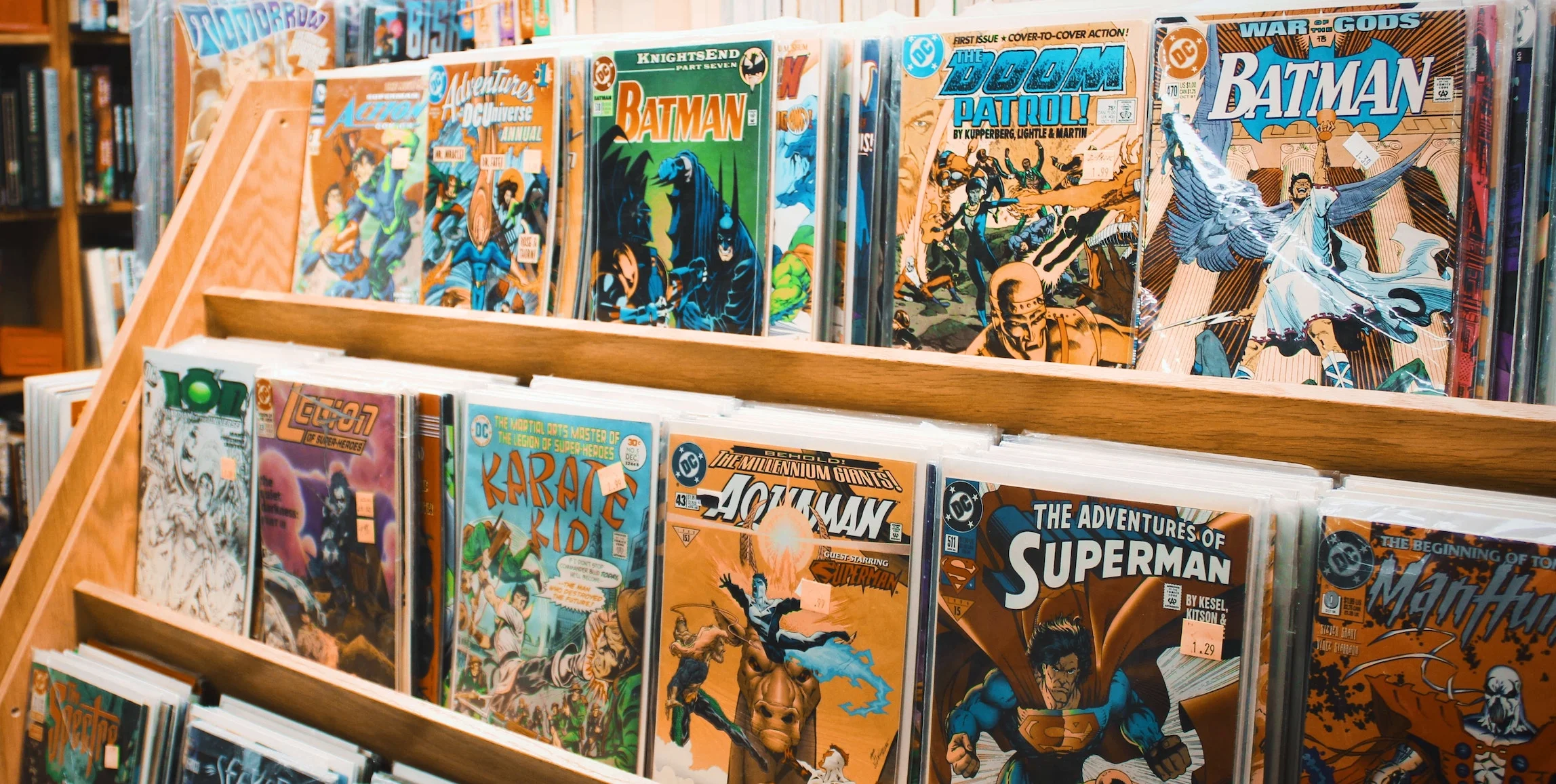
Comics!

All of these are trade paperbacks, although they look the same as a graphic novel.

The first in the Pocket Books run.

If you wanted books about comic-book characters in the 90s, these were often your best bet.

Comics adapted into books. Very different from “comic books.”

Not Marvel, but superheroes in prose, if that interests you.

Usually “there must also come” just gets shortened to “comes.” Fits into a tweet easier.
Min-Maxing and Meta-Gaming. If you're sitting at a table playing D&D, you likely do not want to be accused of either of these. But, what are they exactly, and can they ever be a force for good? Find out in this week's episode. Bonus: Where does the opening phrase of the podcast come from?
Don’t forget to listen on the Radiopublic App to help support the show. Now, with direct tipping possible!

Perhaps a point or two more in perception would have been good.

Please, do go on…

Pretty please?
The Eradicator. Cyborg Superman. Steel. Superboy. Each claimed to be Superman's successor, but none were the true heir. Where did they come from, and what happened to them after Superman's return?
Don’t forget to listen on the RadioPublic app to support the show at no extra cost to you!

The story that brought these four to the forefront.

One of these turns out to be a villain. Any guesses on which?

The Eradicator’s original form. And yes, that’s Superman with a beard.

Just a slight transformation from his hand-held device form.

Hank has seen better days.

Who wouldn’t trust that face?

Not a replacement, just an homage to a hero.

Natasha takes over as Steel, and she means business.

Alas, I knew her Horatio…

Leather jacket, unnecessary thigh belt, sunglasses? Oh right, it’s the 90s.

Young Justice isn’t a great name, but Impulse wanted to call them Super Heroes In Training, so it could be worse (check the acronym…)

The 1990s eventually passed, thankfully for Superboy.

Superboy decides to take after his other “dad” for a little while. It doesn’t end well.
In anticipation of the upcoming movie, we look at the history of Carol Danvers, and touch on the other Captain Marvels in the Marvel Universe.
Don’t forget to check out the Radiopublic app. Listening to Welcome to Geektown there helps support the podcast directly, which helps keep the podcast and the website running!

Captain Mar-Vell, aka the original (Marvel Universe) Captain Marvel.

Monica Rambeau. The only Captain Marvel with no Kree connection.

Phyla-Vell (left) and Genis-Vell (right), with Rick Jones (center). Yes, that is a taxonomy pun. Thank Peter David for that!

Carol’s first Ms. Marvel costume. Apparently, her neck is cold, but her torso is warm.

Carol’s first appearance as Binary. Note the two stars on the uniform to represent her codename.

Carol used this costume under the codenames of Warbird and Ms. Marvel (the second time she went by that name)

Finally, Carol in her Captain Marvel costume. So much more practical than her previous outfits.

Carol sometimes wears this “Mohawk helmet” in battle, and yes, we will see it in the movie!
As mentioned in the episode, the essay an in-depth look at Avengers #200 and the horrible disservice done to Ms. Marvel and the rest of the Avengers is available at Carol A. Strickland’s website in a piece titled “The Rape of Ms. Marvel.”
This episode, we talk Hard Science-Fiction (or Sci-fi), Soft Sci-fi, and Fantasy. Comparing and contrasting those different genres allows us to classify where Star Wars fits in. Before that, however, a clarifying question deriving from Episode 10, and a comment made about robots and androids.
Listen on the Radiopublic App in order to help support the show at no cost to you!

Robot…

Android…

Cyborg.

He scienced the heck out of this…with real science! That is some Hard Sci-Fi.

Here’s a Mars movie that goes softer on their Sci-Fi (Mission to Mars).

The epitome (and arguably the progenitor) of most of today’s modern fantasy.

So, where does this belong?
In order to answer a listener's question about the economics of Wakanda, home of the Black Panther, Kurt talks to economics professor Dr. Matt Dobra about how the economics of Wakanda would (or would not) work in the real world. Learn about Dutch Disease, the Resource Curse, and more, through the lens of pop culture!

Long live the King!

Pretty close to where I said in the episode, just a little farther east.

In the movies, this shield is made of pure vibranium. In the comics...that's a little more complicated. Ask me about it sometime!
With the Fox/Disney deal pretty much complete, we contemplate how mutants can be seamlessly integrated into the Marvel Cinematic Universe.

Well, I don't remember that happening in Avengers: Age of Ultron...

This had a few ideas that inspired the movie, but it's still far from an "adaptation."

Turns out, there's more of Hawkeye on this cover then there was in the movie.

Almost everyone on this cover has actually appeared in a movie or Netflix show in the last 10 years. 10 points for the first person to name the three exceptions.

Is it secret? Is it safe? (Whoops, wrong universe)

If you are a Thor fan, you'll definitely want this. There are Thors galore!
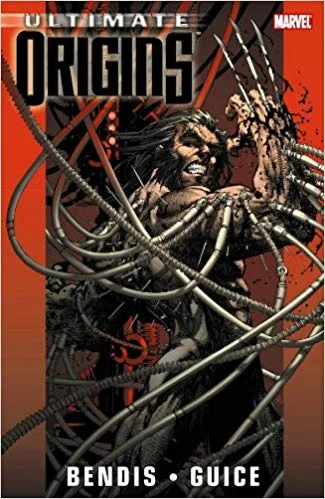
Acupuncture gone very, very wrong.
Starting from near the beginning of the science-fiction genre, here are just a few times that sci-fi predicted technology before its arrival in our world.

Verne overestimated the flight time by about a day, but they got knocked off course by an asteroid.

If you're expecting the book "I, Robot" to bear any resemblance to the Will Smith movie...don't.

Not actually a robot, but an android (robots are purely mechanical, androids have some organic bits to them).

"Little known" fact. "Beam me up, Scotty" is never said in the TV show or any of the original cast movies. (Many Trekkies already know this)

Star Trek PADDs: Collect the entire set!
Listener Joshua C. just watched the pilot of Cloak and Dagger, and is curious to find out how close the characters and other aspects of the show hew to their original comic book counterparts.
If you want to support the creator of Cloak and Dagger (and Rocket Raccoon!), please visit BillMantlo.com and click on the Donate link there.

Looks like a typical teenage drama until you notice Tandy's right hand...

We're going to get a lot of titles that are "Noun and Other Noun," aren't we?

They don't show it here, but this trade's title is "Lost And Found."

Shadows and Light? Oh, come on! Now you're not even trying!

Whoops. Wrong Cloak & Dagger. But look! Music by Brian May (of Queen)!
We go over a few comic book stories and characters that have fourth-wall breaking as an important part of their dynamic. And if you're not familiar with what "breaking the fourth wall is," I explain that up front.

Time out! No, seriously, time out! What is this doing here?

Deadpool does it right on the box! (That is probably the least family-friendly comment I'll make on this site or the podcast)

Classic? Thanks for making me feel old, Marvel!

She really means it folks...

This book is as fun as the cover makes it appear to be.

While this book is as weird as the cover makes it appear to be.

I don't remember if this happens in the book, but the fact that it's possible tells you a lot.
Thanks to the question from listener Justin B. (No, it's not Bieber), this is the first in a recurring feature we'll come back to every now and then, each time focusing on a different heroic identity. We'll look at the people who have taken the place of the original, and what happened to them once the primogenitor returns.

Who wants to help Cap punch ole' Hitler in the jaw?

This is a better question than "Spider-Man: Threat or Menace?"

"No capes!" Steve should have listened to Edna, as he tripped on this cape more than once.

Steve is the one on the left, although John Walker will wear the black costume as "U.S. Agent" down the road.

Turn around Bucky, and help Black Widow find her contact lens!

You will believe a Cap can fly!

The infamous "Cap was Hydra all along" storyline. Sam and Bucky play important roles.

Isaiah Bradley, aka "The Black Captain America." Urban myth or forgotten hero? (Hint, it's the second one.)
The listener question this time is about the rivalry of Marvel vs. DC; the differences between the two companies, the history of their feuds and collaborations, and other causes for the rift in the fan community.

One of these fights is fairly even. The other two, not so much...

In true 90s fashion, votes for this were either mailed in, or you could vote on an America Online page.

Some of these mash-ups made more sense than others, but they were all fun.

That cover alone made this worth getting. Unfortunately, the trade is out of print, so good luck getting it at a reasonable price.
Two listeners get their questions answered this time. One wants to know what makes Legacy games special and if they're worth the price. The other wants to know why everyone in movies is crossing their arms.

The beginning of the Legacy Legacy.

You can get the red box, or the blue box. They are identical.

If you want to have a game you can keep playing after the campaign is done, this is my recommendation.

This is functional...

and this is just because Ryan Reynolds was having fun.

Warning: Don't get too attached to the noblemen.

Season 2 comes in black and yellow. Collect all four to make one big image!

Not out yet, but available to pre-order. Looking forward to it!

This is symbolic...

My vote's for T'Challa, but I wouldn't disagree with any of them to their face.
Mutants are "hated and feared" by many humans in the Marvel Universe, but listener Aaron L. wants to know why they're treated so differently from the other super-powered beings. Kurt tackles this question, as well as announcing a contest! (See below for more details)

How exactly does Iceman see? Perhaps that's why he missed.

No, of course I wasn't the first to make that joke.

16 million dead, and that's the opening chapter. The story's called "E for Extinction" for a reason.

What's wrong with Wanda?

I accidentally refer to this storyline as "Mutant Messiah" in the episode. I was close...
Contest announcement! Go to the Welcome to Geektown Facebook page, and share any post there for an entry into the contest. Get two more entries into the contest by leaving a five-star review on iTunes (this also gets you in the Geektown City Council). One winner, picked at random, will win their own copy of Ultimate Spider-Man Vol. 1 Trade Paperback, where Peter Parker's origin is retold in a more modern format. A great jumping-on point!

With great something, comes great something else...
In anticipation of Avengers: Infinity War, listener Joel L. asks about its villain, Thanos, and why he's so scary.

The Blood Brothers would be completely forgotten were it not for their being in this issue.
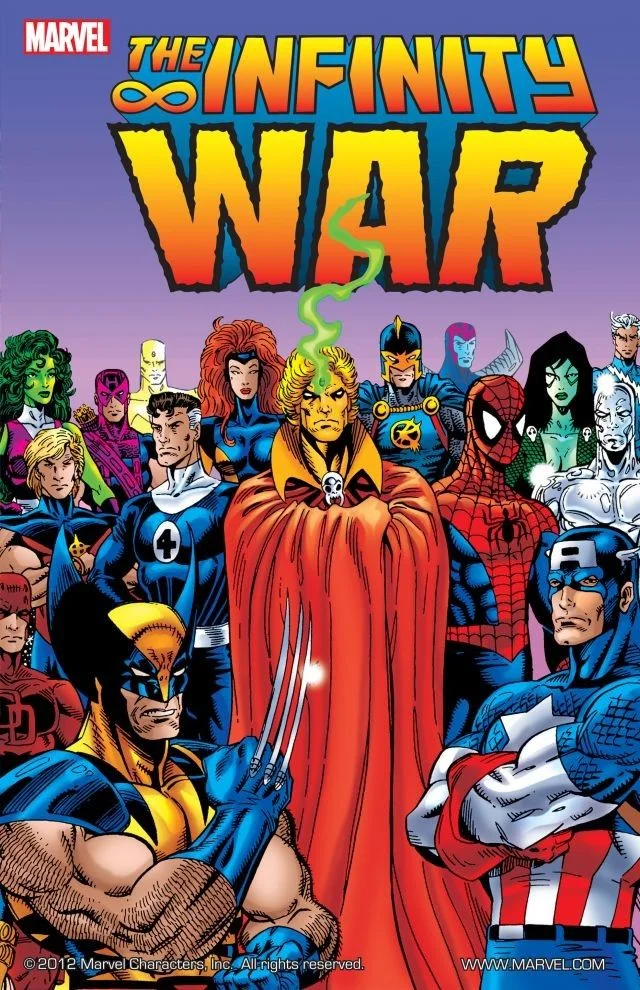
I see five characters here you'll actually see in the movie. Maybe six.

A lot of characters die in this book. Most are back now.

The defining Thanos story to date, and the major inspiration for the film.

Infinity Crusade: Yes, religion gets brought up. No, not well.

We've apparently run out of nouns to go with "Infinity."
Don't forget to stay past the credits!

For the cosplayer in your life.
Where should one begin reading when they take their first foray into the Marvel Universe? That's the question asked today by listener Justin B., and Kurt offers a few different options with pros and cons for each.

She's already caught. How will turning invisible help?

The DIY option for the budding young colorist.

Power and Responsibility. Prepare to read those words a lot.

No more what now?
Learn the history of the various reboots of the DC Universe, both hard and soft. From Action Comics #1 in 1938 all the way to 2016's Rebirth, find out about the big continuity shake-ups that have changed the history of some of your favorite characters.
Don't forget to Subscribe in iTunes!

In the beginning...

The Silver Age starts in a Flash

Flash meets Flash

It's called Crisis for a reason

These things never go well for The Flash

A major crossover with no Superman, Batman, or Wonder Woman?

High collars and low cut tops. Thanks, Jim Lee!

The oddest game of tag ever.
This introductory episode introduces the idea of the show, and informs you of all the ways you can submit questions to be answered on future shows. The quickest and easiest of those is to email them to welcometogeektown@gmail.com. I look forward to hearing from all of you as you are each Welcomed to Geektown!
Welcome to Geektown! This is/will be a podcast where I answer questions from geeks and non-geeks alike about all sorts of geeky subjects. There are some people out there who feel that there should be an "entry barrier" into fandom, and you have to prove you already know everything about a subject before you can call yourself a fan. I say "No!" If you like something, or want to learn more about something, you should never feel ashamed. And that's why I created this: to give people a safe space to ask the questions they might otherwise feel ashamed or embarrassed to ask. Is there terminology you don't understand? History you want to know more about? Please, ask away! Questions can be placed here, on the comments page of a specific episode that they relate to, or emailed to welcometogeektown@gmail.com.